Are OTF Knives Legal in California? Here’s What You Need to Know
Last researched: September 23, 2026. General information, not legal advice.
Some OTF knives may be legal in California, but automatic OTF knives with blades 2 inches or longer are subject to major restrictions. California Penal Code § 21510 prohibits carrying a qualifying switchblade on your person, keeping it in the driver’s or passenger’s area of a vehicle in a public place, and selling or transferring it. An automatic blade must be strictly under 2 inches to fall outside this particular length-based restriction; other laws can still apply.
That distinction matters when shopping for an everyday carry knife. “Mini,” “pocket knife,” or “California legal” in a product name is not enough to establish legality. You need to consider the actual opening mechanism, blade length, location, and intended activity.
What Is an OTF Knife?
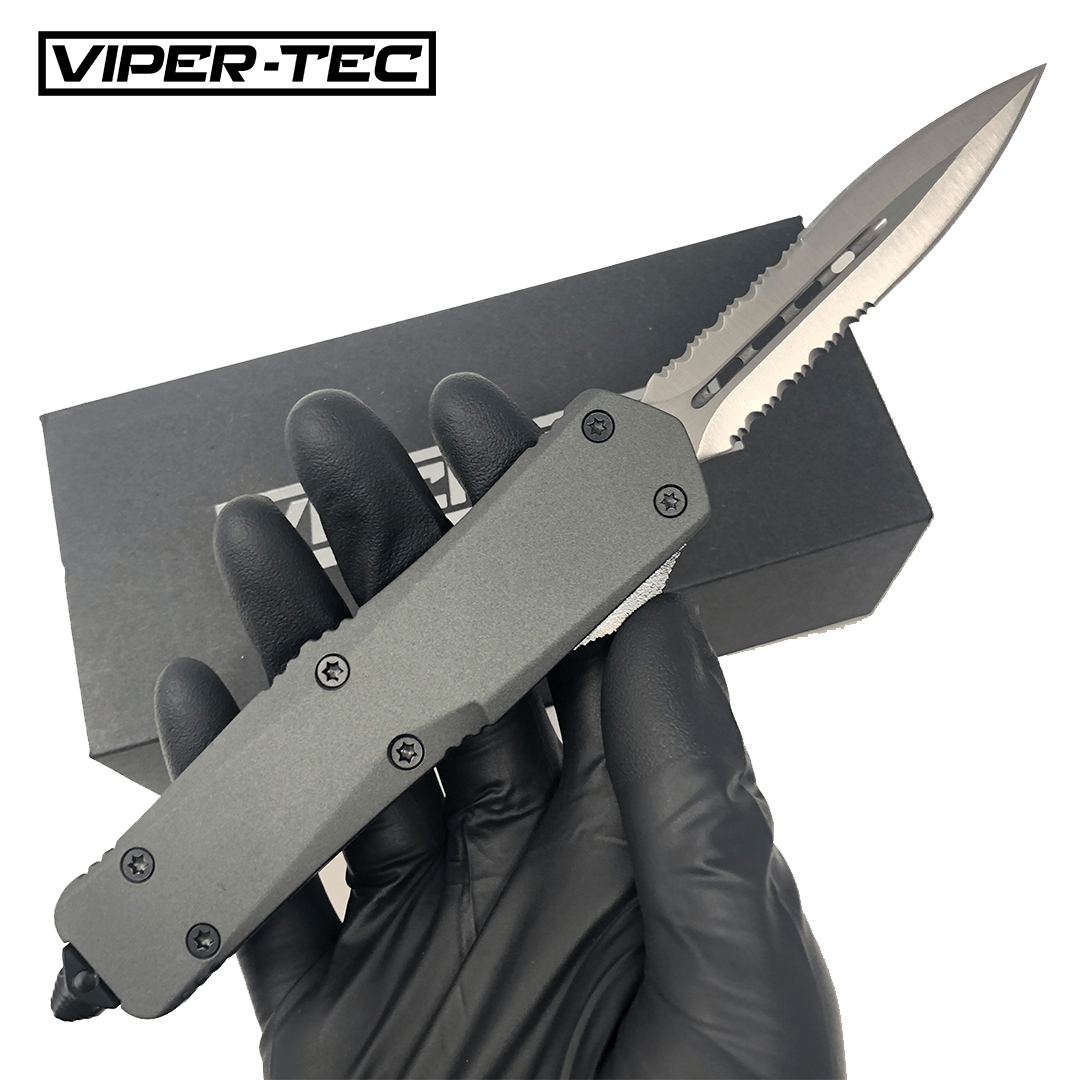
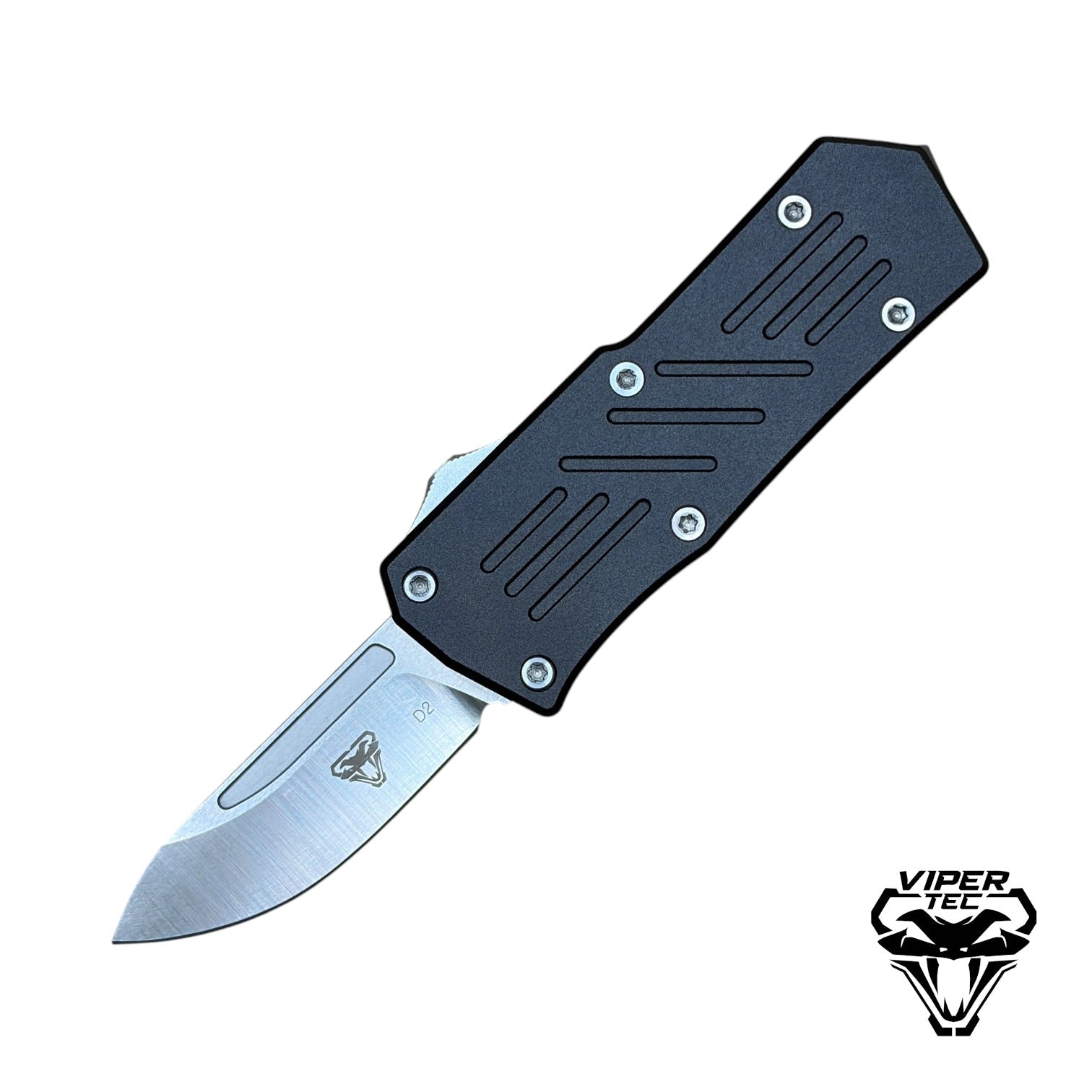
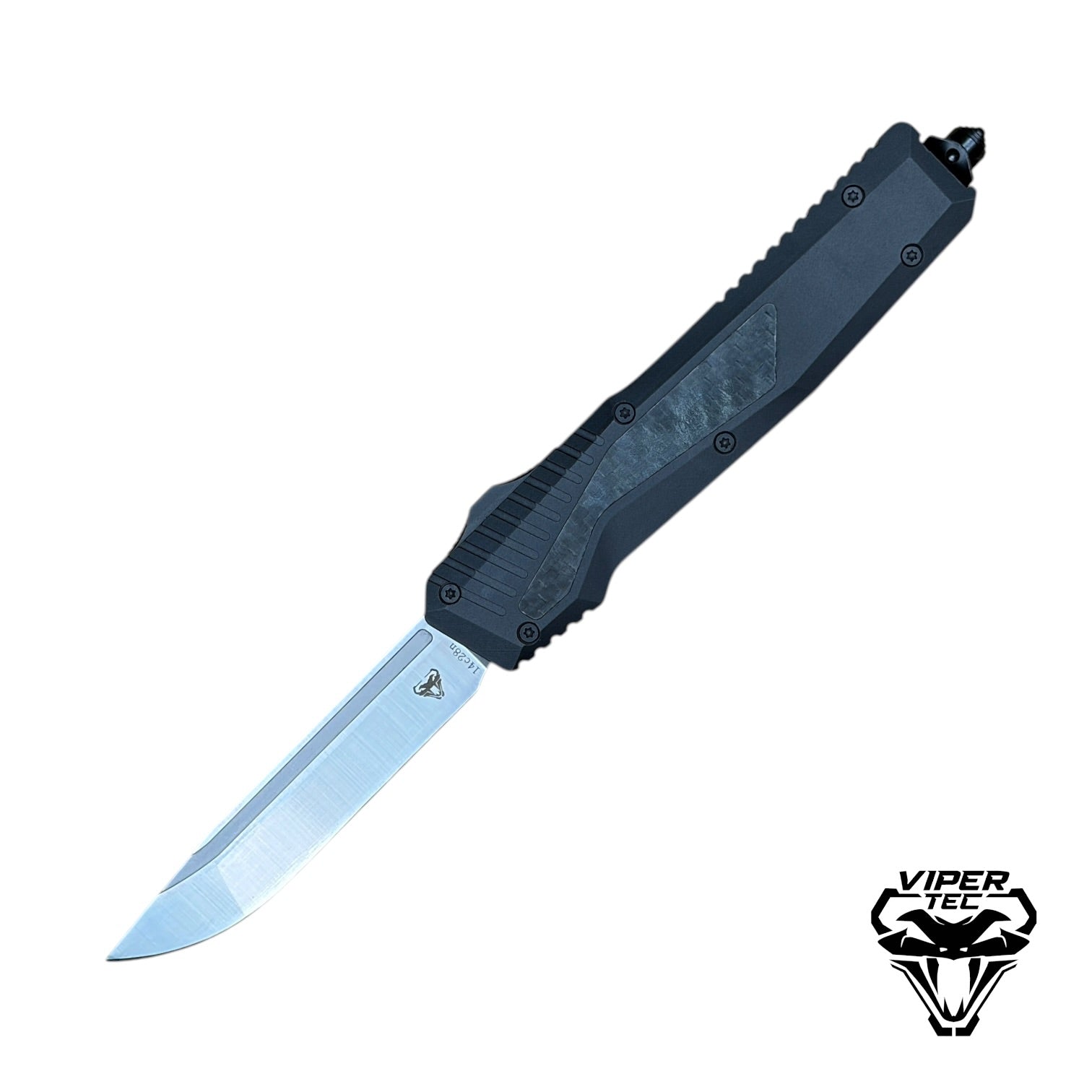
OTF means “out the front.” Instead of rotating outward like a folding knife, the blade slides through an opening at the front of the handle.
An automatic OTF uses a powered mechanism to deploy the blade when a control is activated. Double-action models use a control to both deploy and retract it. Single-action models require a separate manual step to retract or reset the blade. Manual OTF designs also exist, so “OTF” describes blade movement rather than automatically identifying the legal category.
Our OTF knives collection provides product specifications for comparing designs. Inclusion in a collection does not establish that a particular knife is lawful in California.
California OTF Knife Laws: The Two Main Statutes
Penal Code § 17235: What Counts as a Switchblade?
California Penal Code § 17235 defines the switchblade category. It covers certain pocketknife-like knives with blades at least 2 inches long that release automatically through a button, handle pressure, wrist movement, gravity, or another qualifying mechanism.
A typical spring-powered automatic OTF with a blade meeting that threshold generally falls within this definition. A side-opening automatic may also qualify. Double-action operation does not create an exemption.
The statute excludes certain knives opened with thumb pressure applied solely to the blade or its thumb stud, provided that they have the required resistance or closing-bias mechanism. Do not assume that every knife marketed as “manual” or “assisted” meets that exception.
Penal Code § 21510: Which Activities Are Prohibited?
California Penal Code § 21510 makes the following conduct a misdemeanor when it involves a qualifying switchblade with a blade 2 inches or longer:
-
Carrying it on your person.
-
Possessing it in the driver’s or passenger’s area of a motor vehicle in a public place or a place open to the public.
-
Selling, offering or displaying it for sale, lending, transferring, or giving it to another person.
The carry restriction is not limited to concealed carry. Displaying a pocket clip or carrying the knife openly does not, by itself, avoid this provision.
Are Automatic OTF Knives Under 2 Inches Legal in California?
A blade strictly shorter than 2 inches falls outside the blade-length threshold in §§ 17235 and 21510. This is why short-bladed automatic knives are often described as California-legal models.
Exactly 2 inches is not under 2 inches. A listing that rounds a blade measurement to “2 inches” should not be treated as proof that it qualifies for the shorter-blade category. Verify the actual specifications and applicable measurement rules before relying on a marketing label.
| Automatic OTF blade length | Effect of California’s switchblade length threshold |
|---|---|
| Less than 2 inches | Outside this specific threshold; other restrictions still need review |
| Exactly 2 inches | Meets the threshold |
| More than 2 inches | Meets the threshold |
Even a shorter knife may be restricted by local ordinances, rules for particular locations, or other weapons laws. The threshold is one part of the analysis, not permission to carry anywhere.
Can You Own an OTF Knife at Home in California?
Ownership and carrying are different questions. Section 21510 does not expressly create a blanket prohibition on merely storing a qualifying switchblade at home. However, it does prohibit the specific carrying, vehicle-possession, sale, and transfer activities listed above.
That distinction should not be read as permission to buy, receive, transport, or carry a restricted knife. Other applicable laws and the facts of the situation still matter. If your question concerns an existing collection or a proposed transfer, consult a California attorney before acting.
Are Manual OTF Knives Automatically Legal?
No. A manual mechanism may change the legal analysis, but the product label alone does not settle it. California’s switchblade definition includes more than spring-powered button opening, so the knife’s actual operation needs review.
Separate concealed-carry rules may also apply. Penal Code § 21310 addresses concealed dirks and daggers, while § 16470 defines that category. Do not assume that an exception applicable to a conventional folding pocketknife necessarily covers every sliding-blade design.
Location Matters, Even with a Short Blade
California has additional restrictions for particular places. For example, Penal Code § 626.10 regulates specified knives and other weapons on school and college grounds, and § 171b addresses weapons in certain public buildings and meetings.
These provisions have their own definitions and exceptions. City and county ordinances may impose additional rules; California does not have comprehensive statewide knife-law preemption. Check your destination as well as your home jurisdiction. The American Knife and Tool Institute’s California overview is a useful starting point for identifying issues to investigate.
How Do California’s Rules Compare with Other States?
There is no single nationwide answer to “are out-the-front knives legal?” State rules differ, and permission to possess a knife does not always mean permission to carry it in every place or manner. These brief comparisons are not complete state-law guides.
Are OTF Knives Legal in Texas?
Texas generally permits automatic OTF knives and does not use California’s 2-inch switchblade threshold. Instead, its knife rules distinguish blades longer than 5.5 inches as “location-restricted knives,” with additional location and under-18 restrictions.
That does not mean every knife is allowed everywhere. Check the relevant rules before travel or carry. See the AKTI Texas knife-law overview, which identifies the applicable Texas Penal Code provisions.
Are OTF Knives Legal in Florida?
Florida generally permits ordinary automatic OTF knives, but concealed carry requires a separate analysis. Under Florida Statutes § 790.01, covered concealed weapons may be carried by license holders or people who satisfy the statute’s specified eligibility criteria without a license. Permitless carry is not unrestricted carry for everyone.
Florida also distinguishes an OTF whose blade stays attached from a ballistic knife that launches a detached blade. Section 790.225 prohibits ballistic self-propelled knives and expressly excludes devices whose opened blades remain physically integrated. Location and other weapons restrictions still require review.
Are OTF Knives Legal in Pennsylvania?
Pennsylvania removed its express automatic-knife prohibition through Act 119 of 2022, effective January 2, 2023. Automatic opening alone therefore no longer places a knife in the prohibited category under 18 Pa.C.S. § 908.
That is not a blanket exemption from weapons laws. Section 908 retains language covering implements for serious bodily injury that serve no common lawful purpose. Other laws, location restrictions, local rules, and unlawful conduct can still affect possession or carrying.
What Are the Penalties for Violating California’s Switchblade Law?
A violation of § 21510 is a misdemeanor. Under the general punishment provision in California Penal Code § 19, the maximum is six months in county jail, a $1,000 base fine, or both, unless another law prescribes a different punishment. Assessments and other case-related costs may add to the financial consequences.
This is a penalty for prohibited conduct, not a statement that every instance of home ownership is an offense. Other charges may arise from separate conduct, such as unlawful concealment of a dirk or dagger. Someone facing an actual charge should obtain advice from a California criminal-defense attorney.
Have Court Decisions Changed California’s OTF Knife Rules?
A relevant documented case is Knife Rights, Inc. v. Bonta, No. 24-5536. On January 30, 2026, a Ninth Circuit panel rejected a facial Second Amendment challenge to California’s switchblade regulations, affirming judgment for the state on different grounds from the district court.
The panel’s reasoning focused on concealed public carry; it did not decide the constitutionality of every other application of the statutory scheme. On July 16, 2026, the court denied panel rehearing and rehearing en banc. See the official court order and accompanying opinions.
This was a constitutional challenge, not an individual arrest example. These decisions did not repeal the statute or create general permission to carry a 2-inch-or-longer automatic OTF. Check for later rulings before relying on any older article or social-media claim.
What to Check Before Buying or Carrying
Before selecting an OTF knife for California, verify the exact blade length, actual opening mechanism, current statutes, local ordinances, and rules for the places you plan to visit. Review purchase, transfer, and shipping requirements separately from possession and carry.
For product comparisons, our automatic knives collection explains available designs and specifications. A retailer’s ability to display a product or accept an order is not a legal determination for your location.
Viper Tec is not responsible for researching or determining each customer’s current local laws on the customer’s behalf. Customers are responsible for verifying and complying with all applicable federal, state, and local requirements before purchasing, receiving, possessing, transporting, or carrying a knife. Laws, regulations, and court interpretations change and may have changed since this article was written or last updated. This article provides general information, is not legal advice, and does not guarantee that any product or activity is lawful in your circumstances. Consult current official sources and a qualified attorney when needed. Nothing in this notice removes any legal obligations that apply to Viper Tec as a seller.